
E85 (Flex Fuel)
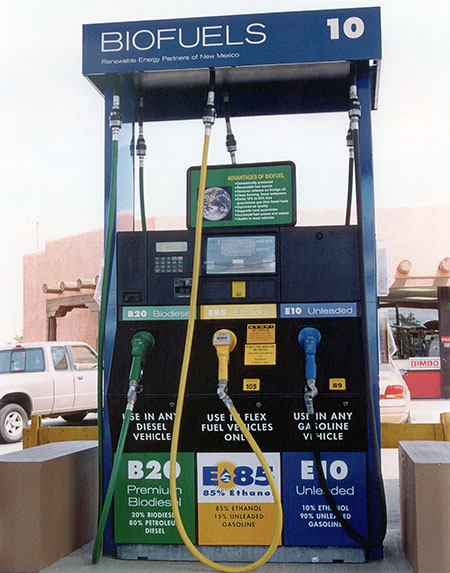
E85 (or flex fuel) is a term that refers to high-level ethanol-gasoline blends containing 51% to 83% ethanol, depending on geography and season (see Fuel Properties and E85 Flex Fuel Specification). Visit Fueleconomy.gov to learn how to identify a flex-fuel vehicle (FFV) or use the Alternative Fuel and Advanced Vehicle Search to find current FFV models. Use the Vehicle Cost Calculator to look up FFV fuel economy, fuel costs, and pollution reductions.
Other than lower miles per gallon, motorists driving FFVs will see little difference when using E85 versus gasoline. Depending on the actual ethanol content, E85 has less energy per gallon than gasoline to varying degrees (the impact on fuel economy lessens as the ethanol content decreases).
E85 Stations
More than 4,200 public E85 stations in 44 states offer high-level ethanol blends to the more than 20.9 million FFVs on U.S. roadways. Find E85 fueling station locations near you.
Stations selling blends above E10 are subject to additional regulations. For more information, visit the Codes, Standards, and Safety page.
 Maps & Data
 Case Studies
 Publications
 Tools
Tools