
Ethanol Equipment Options
Equipment Compatibility and Availability
All existing tank and many associated underground storage tank (UST) equipment manufacturers have prepared letters stating compatibility to meet federal code. These tables present equipment information from 2016. Contact manufacturers for the most up-to-date information about new models.
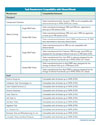
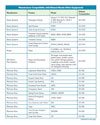
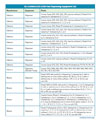
A service station consists of many interconnected pieces of refueling equipment necessary to fuel vehicles effectively and safely, including approximately 60 pieces of equipment designed to handle fuel and fuel vapor. The equipment that delivers fuel to a vehicle includes tanks, pipes, a submersible turbine pump, a dispenser, and hanging hardware. The remainder and majority of the service station refueling equipment is used to receive and store fuel and prevent, detect, and contain releases. This equipment includes an overfill protection device, a leak detection device, shear valves, fill and vapor caps and adaptors, containment sumps, and all associated fittings and accessories. Equipment that is compatible for use with ethanol blends above E10 is available in every category from multiple manufacturers. Above-ground equipment must be third-party certified (UL Solutions is the primary third-party certifier for refueling equipment) for the fuel dispensed. Below-ground equipment, which must be compliant with federal code, must either be third-party certified for the fuel it dispenses or must have a letter from the manufacturer stating its compatibility with specific ethanol content. See the Handbook for Handling, Storing, and Dispensing E85 and Other Ethanol-Gasoline Blends for lists of compatible equipment and information about how to dispense blends above E10 at a station. If specific equipment is not listed, please contact the manufacturer directly, as they regularly introduce and retire product lines and models. (Note: These lists are based on data from 2016; contact manufacturers for compatibility with new models.)
Tanks
Several configurations of tanks exist for storing fuel at stations, including ethanol blends. These include:
-
Underground Tanks: Most existing tanks are compatible with ethanol blends up to 100%. All existing companies that manufacture steel tanks to store transportation fuels have issued signed letters stating their compatibility to store ethanol blends up to E100, making them compliant with federal code. All steel tank manufacturers have a UL 58 listing for flammable fuels, which includes all transportation fuels. Fiberglass tank compatibility depends on the manufacturer, the year the tank was built, and the type of tank (single or double wall). Both existing fiberglass tank companies, Xerxes and Containment Solutions, have maintained a UL Standard 1316 listing for E100 for many years. Containment Solutions issued a letter stating that all tanks it has manufactured are compatible with all ethanol blends. Xerxes and Owens Corning (which no longer manufactures tanks) have stated that compatibility depends on the tank wall type and the year it was manufactured. For more information, refer to Appendix A in the Handbook for Handling, Storing, and Dispensing E85 and Other Ethanol-Gasoline Blends or contact the equipment manufacturer.
-
Above-Ground Tanks: All above-ground tank manufacturers have provided statements of compatibility with all ethanol blends including E85.
-
Tank Preparation: Whether above or underground, a tank must be cleaned prior to storing any blend above E10, including E85. E85 will “clean out” and absorb contamination left behind by years of petroleum fuel storage. Converting diesel equipment might require more thorough cleaning. Incompatible tanks need to be replaced.
Other Underground Storage Tank Equipment
All existing pipe manufacturers have UL 971 listing for ethanol blends up to E100. To comply with federal code, other underground equipment manufacturers have either UL listed certification for their equipment up to E85 or have stated approval in writing for specific model types with blends above E10. Other underground equipment includes overfill protection, leak detection, shear valves, fill and vapor caps, adaptors, containment sumps, and all associated fittings and accessories. For other underground storage equipment compatibility, please refer to Appendix B of the Handbook for Handling, Storing, and Dispensing E85 and Other Ethanol-Gasoline Blends.
Above-Ground Dispensing Equipment
Dispenser manufacturers offer products for blends above E10 including UL listed E25 and E85 dispensers with blender pump options. Wayne Fueling Systems’ standard dispenser is UL listed for E25, meaning all dispensers they sell are certified for a minimum of E25. Wayne also offers E85 dispensers as an option on multiple models. Gilbarco offers both UL listed E25 and E85 dispensers, and Bennett offers UL listed E85 dispensers.
Hanging hardware includes hoses, nozzles, breakaways, and swivels. Both Husky and OPW offer UL listed E25 and E85 nozzles, swivels, and breakaways. ContiTech offers UL listed E25 and E85 hoses.
Shear valves are an important piece of safety equipment that stop the flow of fuel from the underground storage tank to the dispenser. They prevent fuel release in the event of an accident dislodging the dispenser or a fire. UL listed E85 shear valves are available from Franklin Fueling and OPW.
Submersible turbine pumps draw fuel from the tank and into the piping that delivers the fuel to the dispenser. Both Veeder-Root and Franklin Fueling offer UL listed E85 pumps.
For lists of UL E10+ listed dispensers, hanging hardware, shear valves, and submersible turbine pumps, please refer to Appendix C of the Handbook for Handling, Storing, and Dispensing E85 and Other Ethanol-Gasoline Blends. Contact the equipment manufacturer if you do not see specific models as some might be newer.