
Diesel Vehicles Using Biodiesel
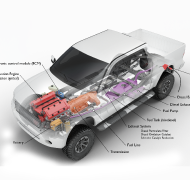
Biodiesel and conventional diesel vehicles are one and the same. Although light-, medium-, and heavy-duty diesel vehicles are not alternative fuel vehicles, almost all are capable of running on biodiesel blends. The most common biodiesel blend is B20, which ranges from 6% to 20% biodiesel blended with petroleum diesel. However, B5 (a biodiesel blend of 5% biodiesel, 95% diesel) is also commonly used in fleet vehicles. B20 and lower-level blends can be used in many diesel vehicles without any engine modification.
Biodiesel raises the cetane number of the fuel and improves fuel lubricity. A higher cetane number means the engine is easier to start and reduces ignition delay. Diesel engines depend on the lubricity of the fuel to prevent moving parts from wearing prematurely. Improved lubricity reduces friction within the moving parts, avoiding additional wear. A primary advantage of biodiesel is that it can improve the lubricity of the fuel at blend levels as low as 1%.
All original equipment manufacturers (OEMs) approve the use of B5. However, it is important to check the OEM engine warranty to ensure that higher-level blends of this alternative fuel are approved, such as B20. Visit Clean Fuels Alliance America for information on OEM support of biodiesel use in vehicles.
 Maps & Data
 Case Studies
 Publications
 Tools
Tools